
Transforming Invironment: Harnessing Psychology for Aesthetic Mastery and Emotional Well-Being
- Sam Lamont
- Apr 2
- 4 min read
Your environment shapes your decisions, your stress levels, your confidence, and the way you see yourself. Most spaces focus on looks alone, but what if your surroundings could do more? What if they could support your mental health, boost your confidence, and guide your choices? I believe that a room is not just a place to live or work—it is an emotional container. It either weakens you or strengthens you. There is no neutral space.
In this post, I’ll share how combining psychology, aesthetic mastery, chromotherapy, trauma-informed awareness, and expert design flow can transform your environment into a powerful tool for emotional well-being. I’ll also introduce you to the Mountain Glam Noir + Luxe aesthetic, a flagship style that uses black, walnut, stone, gold, shadow, and light with surgical precision to create spaces that truly support you.
1. Understand How Your Environment Shapes Your Decisions
Every choice you make in a space is influenced by how that space makes you feel. When your environment is cluttered, chaotic, or poorly lit, your brain works harder to process distractions. This increases stress and lowers your ability to make clear decisions. On the other hand, a well-designed space with intentional flow and calming colors helps your mind relax and focus.
For example, a kitchen designed with clear zones for prep, cooking, and cleanup reduces decision fatigue. You instinctively know where everything belongs, so your brain can focus on creating meals instead of searching for tools. This is not just convenience—it’s psychology at work.
2. Use Chromotherapy to Influence Mood and Energy
Colors affect our emotions and energy levels in measurable ways. Chromotherapy, or color therapy, uses this knowledge to design spaces that support specific psychological states.
Black and deep shadows create a sense of grounding and sophistication but must be balanced with light to avoid heaviness.
Warm gold accents add a touch of luxury and optimism.
Natural walnut and stone textures connect you to the earth, promoting calm and stability.
In the Mountain Glam Noir + Luxe aesthetic, these colors and materials are arranged with precision to create emotional balance. For example, a living room with black walls and gold lighting fixtures can feel both cozy and uplifting, encouraging relaxation without dullness.

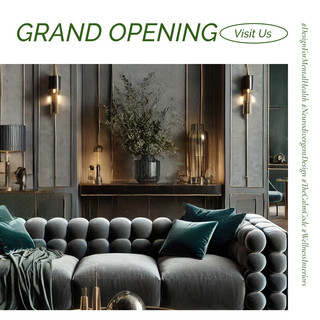
This living room uses the Mountain Glam Noir + Luxe palette to create a space that supports calm and confidence.
3. Design with Trauma-Informed Awareness
Many people carry emotional wounds that affect how they experience spaces. Trauma-informed design recognizes this and creates environments that feel safe, predictable, and supportive.
This means avoiding harsh contrasts, chaotic patterns, or confusing layouts that can trigger anxiety. Instead, spaces should have:
Clear, intuitive flow that helps you move through the room without hesitation.
Soft, natural lighting that reduces overstimulation.
Comforting textures like smooth walnut or warm stone that invite touch and connection.
When a room feels safe, your brain can relax, reducing stress hormones and improving your overall well-being.
4. Follow NCIDQ-Correct Flow for Functional and Psychological Impact
The National Council for Interior Design Qualification (NCIDQ) sets standards for design flow that support both function and comfort. Proper flow means arranging furniture and elements so movement feels natural and effortless.
For example, in a bedroom, placing the bed where you can see the door but are not directly in line with it creates a subconscious sense of security. In a workspace, positioning your desk near natural light but away from distractions helps you focus.
This flow is not guesswork or generic Pinterest inspiration. It is based on research and experience, ensuring your environment shapes your decisions in positive ways.
5. Avoid Filler and Generic Design Thinking
Many spaces fill corners with random decor or follow trends without considering psychological impact. This creates visual noise and emotional confusion.
Instead, every element in your space should have a purpose. In Mountain Glam Noir + Luxe, there is no filler—only intentional choices that support your emotional state. For example:
A single gold sculpture draws the eye and adds warmth without clutter.
Walnut shelves provide both storage and tactile comfort.
Stone surfaces ground the space and connect you to nature.
This precision creates calm, focus, and strength.

Every design element in this space supports emotional well-being through texture, color, and placement.
6. Create Emotional Containers That Strengthen You
When your environment is designed with these principles, it becomes more than a backdrop. It becomes a container that holds your emotions, supports your mental health, and strengthens your confidence.
Imagine walking into a room that immediately calms your mind, helps you focus, and makes you feel capable. This is the power of design that understands how your environment shapes your decisions and your emotional state.
Your space should not just look good. It should feel good. It should support you every day, helping you make better choices, reduce stress, and see yourself as strong and capable.
If you want to transform your home or workspace, start by thinking about how your environment shapes your decisions and emotions. Choose colors, materials, and layouts that support your well-being. Avoid filler and trends that don’t serve you. Instead, create a space that is a true reflection of your needs and strengths.
Comments